


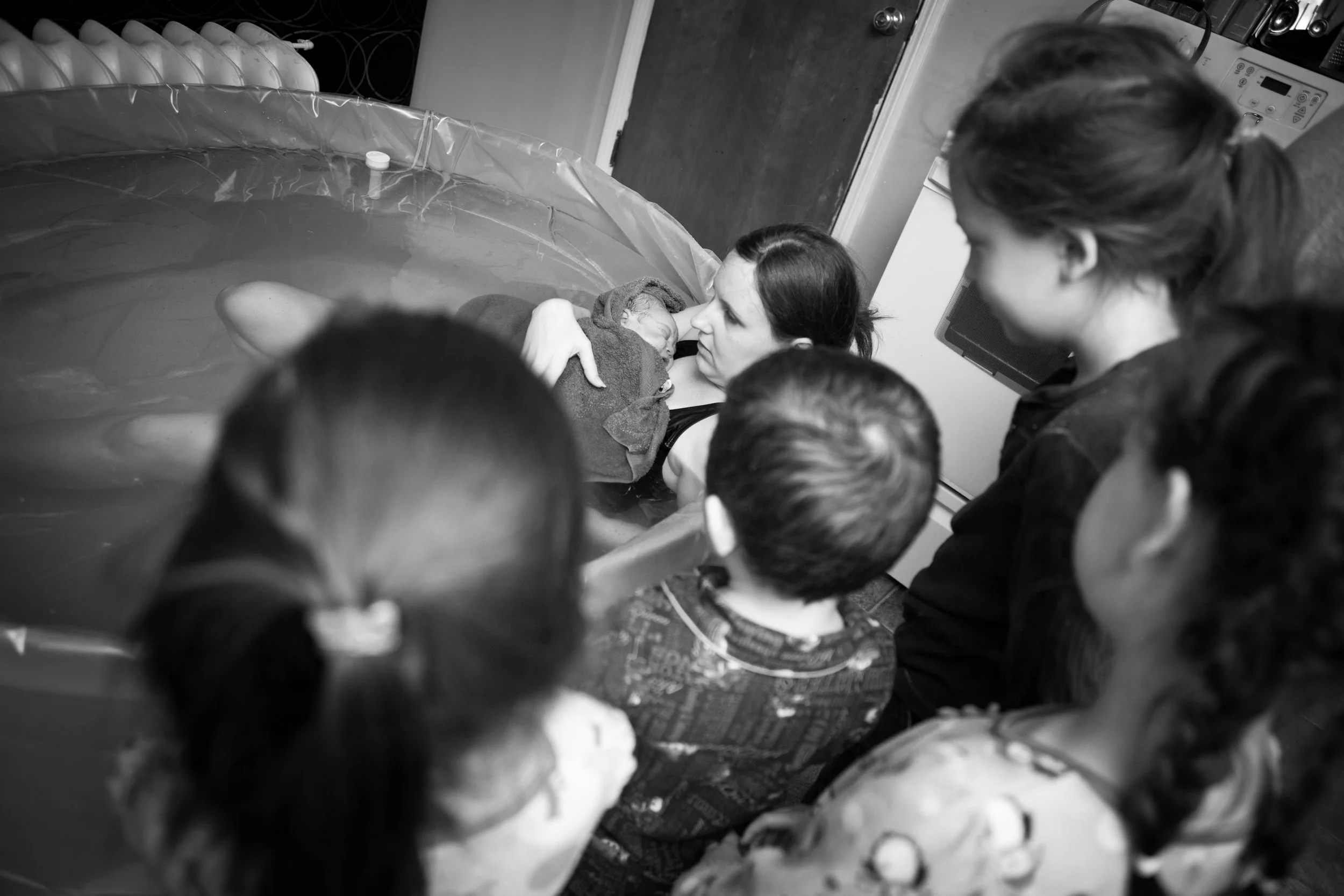
Waterbirth Education Page
What’s waterbirth and how is it different from water immersion?
Water immersion in labor means you use a birth tub/pool during first stage (before baby is born) for comfort and pain relief.
Waterbirth means you stay in the water during pushing and birth, and baby is then gently brought to the surface.
Why many choose Waterbirth
Research on water immersion in labor shows it can reduce pain and anxiety and may shorten labor and reduce use of epidural/spinal analgesia in low-risk pregnancies.
Large evidence reviews on intrapartum water immersion (labor ± waterbirth) also report:
Less use of pharmacologic pain relief and fewer interventions overall
High maternal satisfaction
No clear increase in serious adverse newborn outcomes when appropriate candidates and protocols are used
A large matched cohort study of community births (home and freestanding birth centers) found waterbirth was associated with:
Lower postpartum hemorrhage and fewer postpartum transfers
Fewer newborn transfers/hospitalizations
A small increase in cord avulsion and a small increase in postpartum uterine infection (without increased hospitalization)
Risks
Waterbirth is generally considered safe for low risk clients but it’s not “risk-free.”
Key risks discussed in the literature include:
1) Infection (rare, but can be serious)
Case reports have described newborn infections after waterbirth (including waterborne organisms like Legionella and Pseudomonas). Infection risk is minimized by clean water supply, strict cleaning/disinfection, avoiding standing warm water, and using equipment that doesn’t promote bacterial growth.
2) Umbilical cord avulsion (“cord snap”/tear)
This is the most consistently noted increased risk in waterbirth versus land birth. It’s usually preventable (gentle lift, awareness of cord tension/length) and manageable if recognized immediately (clamp promptly).
3) Temperature regulation (mom + baby)
Water that’s too hot can contribute to maternal/fetal hyperthermia; too cool can chill baby. We monitor the temperature.
4) Aspiration concerns
A healthy newborn has reflexes that typically prevent breathing underwater, but distress can override reflexes
Who is a good candidate?
In general, water immersion/waterbirth is best suited when all are true:
Low-risk, single baby, head-down, term (≥37 weeks), within your midwife’s scope and protocols
You’ve had informed consent about benefits, risks, and alternatives
You can enter/exit the tub quickly with help if needed
When we may recommend “no tub” or ask you to get out
Your midwife may ask you to delay entering or exit immediately if any of the following occur (examples):
Non-reassuring fetal heart rate or inability to adequately assess fetal heart rate
Maternal fever/elevated temperature
Moderate to thick meconium
Excessive vaginal bleeding
Slow progress or contractions that significantly slow/stop in water
Dizziness, or low blood pressure
Breech or multiples (if birth is delayed)
Short cord / cord tension concerns
Need for intensive newborn resuscitation
Placenta issues (prolonged/difficult delivery or bleeding where we cannot accurately estimate blood loss in the water)
Any condition that requires transfer of care under Texas midwifery rules or your midwife’s clinical judgment
Waterbirth is optional. Safety is not. If your midwife asks you to stand or exit, it’s because the risk/benefit has changed in real time.
How we keep waterbirth as safe as possible
Homebirth: Pool selection and setup
Tub is cleaned/disinfected per protocol (germicide & bleach) and set up so the midwife can access you from at least two sides
No essential oils/aromatherapy/additives in the water (they are not proven to prevent infection and can create other issues)
For homebirths we recommended use a new disposable liner for each birth (for portable tubs)
Filling the tub (infection prevention)
Tub is typically filled once active labor is established (not days in advance)
Water is changed after prolonged use (commonly every ~6 hours, depending on the situation)
For birthing pools: use a new, unused potable water hose
Run hot water at the tap for several minutes before filling, then fill to target temperature
If a client uses well water, it should be tested through an appropriate certified lab within the year prior to the due date
Water depth and temperature
Water should cover your abdomen but not reach your neck
Water temperature is kept comfortable and below 100.4°F, checked and documented (including after adding water)
First stage in water
We encourage you to stay hydrated
You’ll be encouraged to empty your bladder regularly
If fetal heart tones can’t be reliably monitored, you’ll be asked to exit
If the water becomes contaminated and can’t be cleared, you’ll be asked to exit unless birth is imminent
We keep a ready “land birth” area next to the tub (dry towels, warm blankets, safe footing)
Second stage: Pushing and birth in water
Birth should be hands-off and physiologic, avoiding unnecessary stimulation of baby’s head
Baby’s head is brought to the surface immediately after birth and must not be re-submerged
Cord is never clamped/cut underwater
Special attention is paid to cord length/tension to prevent cord avulsion
Third stage: The Placenta
We recommend moving out of the water to deliver the placenta as blood loss can be difficult to assess in the tub
Newborn resuscitation readiness
Waterborn babies can have a slower initial transition; we plan for warmth and airway access (typically, baby responds well to light stimulation to illicit a good cry)
We prepare a firm, warm surface near the tub if a full resuscitation is needed
If moving baby to the resuscitation area is necessary, we may recommend cutting the umbilical cord sooner
Your midwives are NRP (neonatal resuscitation program) certified and follow NRP guidelines
Different U.S. organizations interpret the evidence differently:
ACOG (American College of Obstetricians and Gynecologists): supports water immersion during first stage for healthy, uncomplicated pregnancies at term, but states evidence is insufficient for underwater birth and recommends birth on land.
AAP (American Academy of Pediatrics): cautions against waterbirth during/past second stage due to concern about rare but serious infections and emphasizes rigorous infection-control if offered.
ACNM (American College of Nurse-Midwives): supports hydrotherapy as a safe, effective option for pain relief and physiologic birth in appropriately selected low-risk clients, including second stage (delivery of baby!) when protocols are followed.
What this means for you: Waterbirth is an area where evidence is substantial, but professional opinions differ, largely because rare complications are hard to study and protocols vary widely.
Client Agreement
If you choose tub use/waterbirth, you agree that:
You will follow instructions to change position, stand, or exit the tub immediately if requested
You understand the key risks and the ways we reduce those risks
You understand that we may recommend a land birth at any point if safety changes