

Fetal Heart Rate Monitoring in Labor
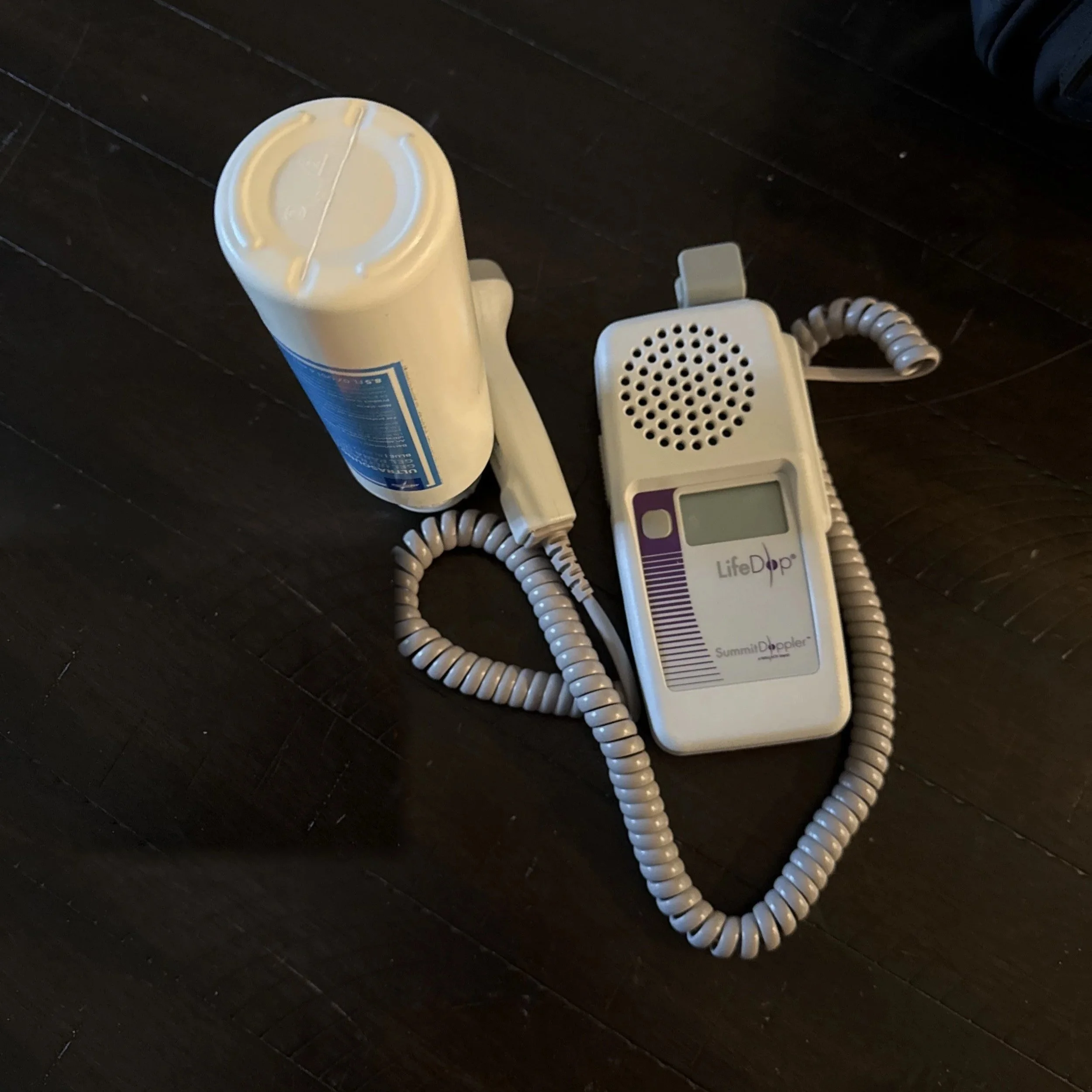
Intermittent vs. Continuous
One of the ways the midwifery model of care differs from the standard hospital approach is how we listen to your baby during labor.
We use intermittent fetal monitoring, not continuous monitoring.
Continuous electronic fetal monitoring (cEFM). The kind that straps two belts to your belly and keeps a nonstop printout running, is standard in most hospital labor units. But for healthy, low-risk pregnancies, the research doesn't support it as the better choice. Intermittent auscultation (listening in at set intervals with a handheld Doppler) is the evidence-based standard of care recommended for low-risk labor by the American College of Obstetricians and Gynecologists (ACOG), the American College of Nurse-Midwives (ACNM), and the Association of Women's Health, Obstetric and Neonatal Nurses (AWHONN).
How we do it:
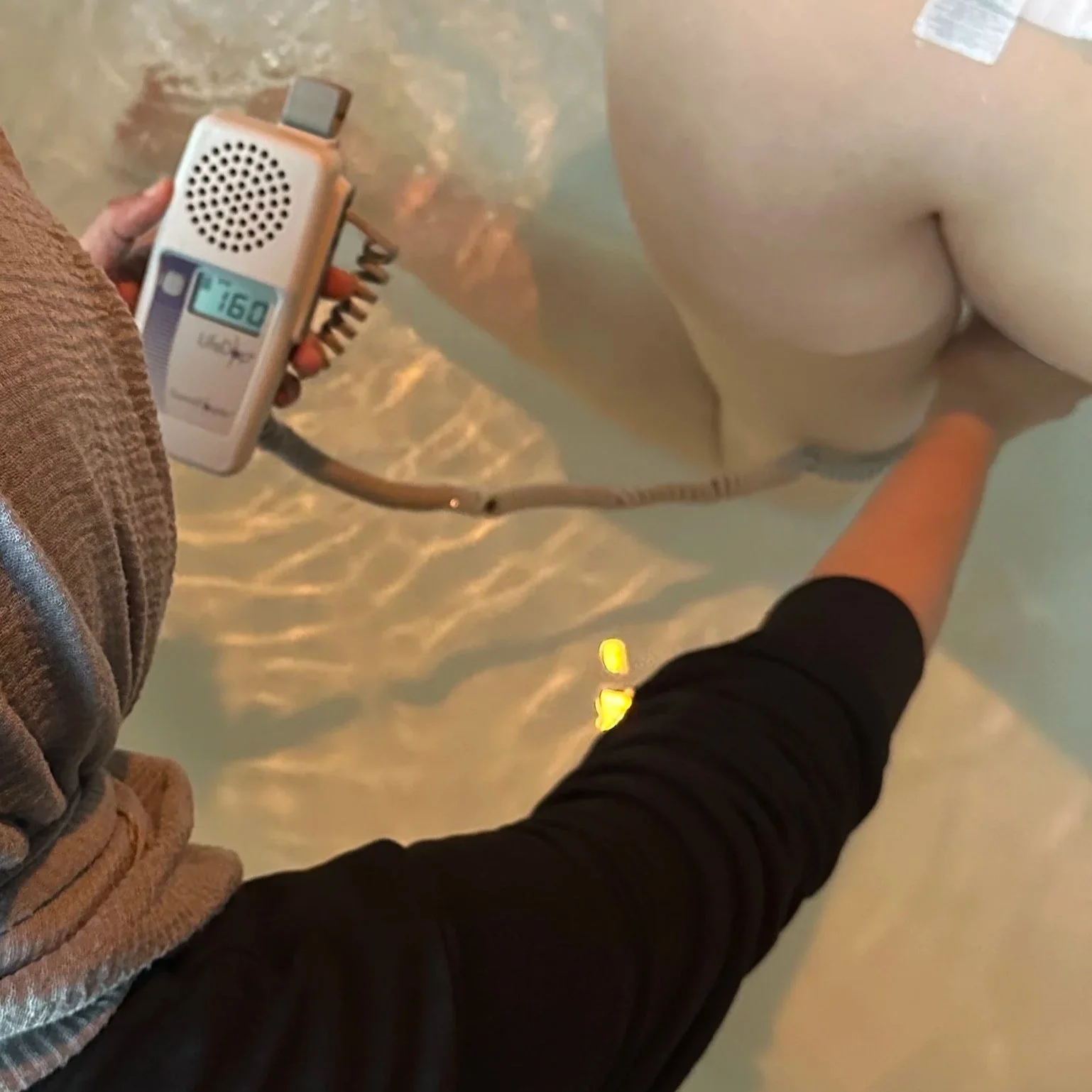
Your midwife listens to your baby's heart rate at regular intervals throughout labor, following AWHONN's recommended timing:
Latent (early) labor: every hour
Active labor: every 30 minutes
Pushing stage: every 5–15 minutes
Between checks, you're free to move, change positions, labor in the tub, eat, rest, or do whatever helps you cope — instead of being tethered to a monitor.

Why we don't offer continuous monitoring:
Continuous monitoring sounds like it should be the "safer" option, but the evidence tells a more complicated story.
Continuous EFM has an extremely high false-positive rate for predicting fetal distress; research places it as high as 99% false for predicting outcomes like cerebral palsy. In practice, this means the monitor frequently flags a pattern as concerning when the baby is actually doing fine, which drives unnecessary interventions.
Large studies, including a Cochrane systematic review, have found that continuous monitoring significantly increases rates of cesarean and operative vaginal delivery compared to intermittent auscultation, without improving outcomes for babies.
If something arises during your labor that puts you or your baby into a higher-risk category, continuous monitoring may become medically necessary. In that situation, we would recommend transfer to a hospital setting where that level of monitoring is available.
For healthy, low-risk births, though, intermittent monitoring lets us keep a close, evidence-based watch on your baby's wellbeing without the unnecessary intervention that comes with the false alarms of continuous monitoring.
If you have questions or concerns about how your midwives will monitor your baby during labor please ask at your next prenatal visit and we will gladly discuss all the details with you!