
When your baby is breech (bottom first)
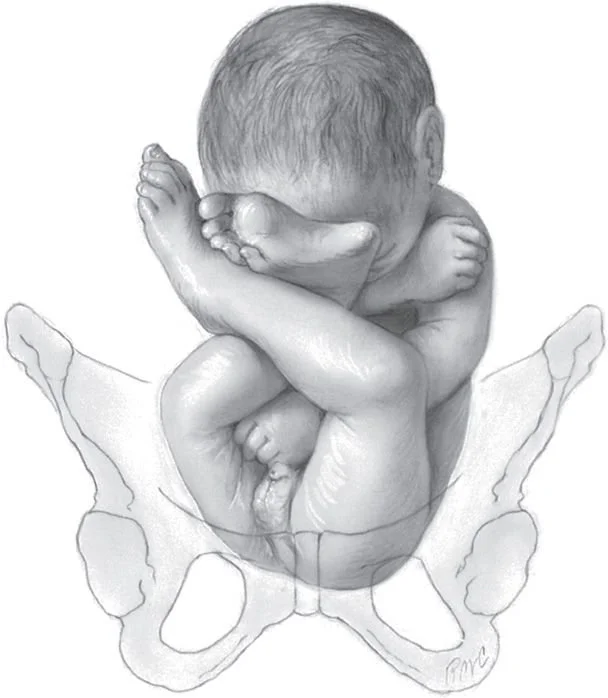
If your baby is currently in the breech presentation
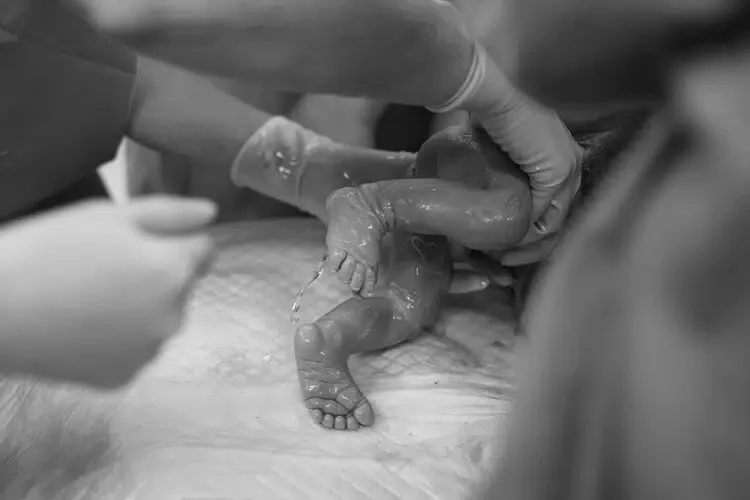
First and foremost don’t panic. Let’s break down what that means and what your options are.
What causes a baby to be breech?
While the exact cause of a baby being in the breech position is unknown we do know there are certain factors that increase the chances of your baby being bottom first. These include but are not limited to:
Prematurity - some babies like to wait until the last possible minute to flip or they come before they’ve had a chance to turn
Polyhydramnios - excess amniotic fluid giving baby too much space to move around
Oligohydramnios - too little amniotic fluid restricting baby’s movement
Laxity of the abdominal wall - also referred to as a pendulous abdomen/ uterus where the uterus tips forward and baby can not engage in the pelvis
Multiples - twins or more
Uterine anomalies - such as a bicornate uterus or septate uterus
Breech presentation in previous pregnancy/ birth
What does breech presentation mean?
Breech presentation is when the baby’s bottom is presenting at your cervix instead of the head. This can include the presence of one or both feet. There are three different types of breech presentation.
Frank Breech - This is when the baby’s bottom is the part of their body in the lower uterus near your cervix, with their legs typically straight up and their feet near their face.
Complete Breech - This is when the baby’s bottom is in the lower uterus near your cervix with their feet tucked, typically like they are sitting criss-cross.
Incomplete Breech - This is when one or both of your baby’s legs or feet are in the lower uterus near the cervix. This is also sometimes referred to as footling breech.
What do I do?
This is typically the first question mothers ask when they find out their baby is breech.
Ideally we would like to encourage your baby to turn into a head-down or cephalic presentation. There are many different exercises, homeopathy treatments, traditional Chinese medicine practices, western medicine approaches, and even activities passed down through traditional midwifery wisdom that may help achieve this goal. Keep in mind not every baby will turn and some will turn spontaneously on their own without our help. While we may do things to encourage baby to turn we never force a baby to turn. You can do all, some, or even none of the exercises below.
Exercises & Physical Activities
Exercises you can do in the comfort of your own home include:
Spinning Babies - is a website full of information on helping you turn your baby. They have a 6 day guided practice for helping turn your baby that can be found here.
The breech tilt - laying on the floor or a very firm surface you will raise your hips approximately 12” off the floor, using large firm pillows to support your pelvis. You should do this 3 times a day for 10-15 minutes at a time. This is best done on an empty stomach and during a time when your baby is active. Concentrate on your baby and not tensing your body, especially your abdominal muscles.
Slant board - using a board that is sturdy enough to support you, place it on your couch slanted towards the floor. Lay on the board with on your back with your feet up. Your hips should be 12-18 inches above your head. This should also be done on an empty stomach and when your baby is active. You can also place something cold like a bag of frozen peas at the top of your belly, and play music through headphones at the bottom of your belly. The baby will be encouraged to turn away from the cold and towards the music. You should do This 3-4 times a day for 10 minutes each.
Postural inversion - If you have access to a pool you can also do postural inversions aka hand stands. You may want to have someone nearby who can help support your legs. You can repeat this as many times as you want until you get tired.
Music - We know that babies can hear sounds outside of the womb, so many women have used music or taped recordings of their voice to try to get their baby to move towards the sound. Headphones placed on your lower abdomen, playing either music or your voice, can encourage your baby to turn out of the breech presentation.
Visualization - Visualize your baby moving their head down deep in your pelvis, several times a day, especially in conjunction with the exercises above.
Flashlight - Using a bright flashlight shine it on your belly and slowly move the light from the top of your uterus down to your pubic bone while you are in the breech tilt or slant board position.
Massage - Starting with your left hand at the bottom of your belly and your right hand just above it. Move your hands in a clockwise motion around the right side of your abdomen. As your right hand reached the top of your uterus let your left lead continuing clockwise until you have come full circle, then start the process over again. You can do this for 10 minutes or more several times a day. If you are unsure how do this we are happy to walk you through it during your next prenatal appointment.
Clothespin - Placing a clothespin on each of your pinky toes at the outside corner of your toenail. The clothespin should be sticking out sideways from your foot. Leave this in place for 30 minutes per day. This is an acupressure point known as a “moving down” pressure point.

Alternative Options
Homeopathy
Homeopathy is an alternative medicine practice that is based on the theory of treating “like with like.” The effectiveness of homeopathic remedies is disputed within medical science so it is up to you to decide if you would like to use homeopathics.
While the concentrations in homeopathic remedies is very small it is still our recommendation you seek the care of a naturopath or homeopathic doctor to manage any homeopathic treatment during your pregnancy.
Some women have seen success using Pulsatilla over a period of several days to 2 weeks, often using it in conjunction with exercises like the breech tilt.
Moxibustion
Moxibustion is a form of traditional Chinese medicine that involves burning a moxa (mugwort) stick near a certain point on the small toe of your foot.
There are resources for you to attempt using Moxa sticks yourself at home or you can seek out a traditional Chinese medicine provider to help you. When seeing a provider for moxa treatment it is often done in conjunction with acupuncture, acupressure, and reflexology.
Chiropractic & Massage
Some chiropractors who are Webster certified may be able to help you turn your baby into a cephalic presentation by doing specific adjustments.
Body workers who are Aware trained may also help.
Western Medicine Approach
Western medicine has developed a technique for manually turning babies know as an ECV or external cephalic version. What this means is your provider is using their hands to physically turn your baby into a head down position. ECV’s are typically not done until 37 weeks of pregnancy.
There are two different options for ECV.
The first being a gentle ECV done in office with your midwife. During this procedure your midwife will have another person assisting her. Your midwife will use either lotion or another form of lubrication to reduce friction when sliding her hands over your belly. The second person will monitor your baby’s heart rate using a handheld doppler, just like when we listen to baby’s heartbeat during your appointments. Your midwife will attempt to gently guide your baby into a head down position manually using a technique similar to the massage recommendation. Again we never force baby to move if they do not freely move in the direction we are trying to turn them. Once your midwife has finished we will listen to baby’s heartbeat for several minutes afterward whether the ECV was successful or not.
The second being an in hospital ECV performed by an OBGYN. This is typically more involved than what we would do in office. While the procedure may vary from practitioner to practitioner the basics typically remain the same. They will usually perform an ultrasound to confirm breech presentation, they will monitor baby’s heartbeat, and your vital signs throughout the procedure. They may administer medication through an IV that is intended to relax your uterine muscles. Once the procedure is done they will then monitor your baby’s heartbeat for several minutes afterward.
Warning Signs
If you have an ECV done regardless of if it is done gently in office by your midwife or in a hospital by an OBGYN, you should always be aware of potential complications that can arise from an ECV. While an ECV is generally considered a low risk procedure nothing is without any risk.
Immediately call your midwife if:
Baby is moving less than normal
You have vaginal bleeding
You are leaking fluid from your vagina
You experience abnormal pain in your abdomen
You begin having regular contractions
or if you are concerned about you or your baby’s wellbeing at any time.
What if my baby doesn’t turn?
If your baby does not turn head down either on their own or with help from you and your provider your midwife will discuss your options with you. This may include a vaginal breech birth with your midwife, a referral to another midwife for a vaginal breech birth, a vaginal breech birth with an OBGYN, or a scheduled cesarean section. Typically you have plenty of time to weigh your options and decide what is best for you and your baby. Remember you are in charge of your body and your birth so even if you discuss it with your midwife to do one thing you are allowed to change your mind. Our goal is always for you to be informed about your options, what the potential risk and benefits of those options are, and make the decision that you feel is best for you and your family.
You can read more about what current evidence shows about breech presentation and birth using the links below. You are also encouraged to do your own research and ask questions.

You can also view our breech informed consent document here.